Loading SVR ENGINEERS

Loading SVR ENGINEERS
Loading noise barriers services
We build the physical shields that protect communities and ecosystems from the chaos of urbanization. SVR Engineers provides end-to-end execution—from manufacturing CSIR-NPL tested acoustic panels to on-site structural erection. We don't just build walls; we engineer quieter, healthier environments while ensuring strict NGT (National Green Tribunal) compliance.
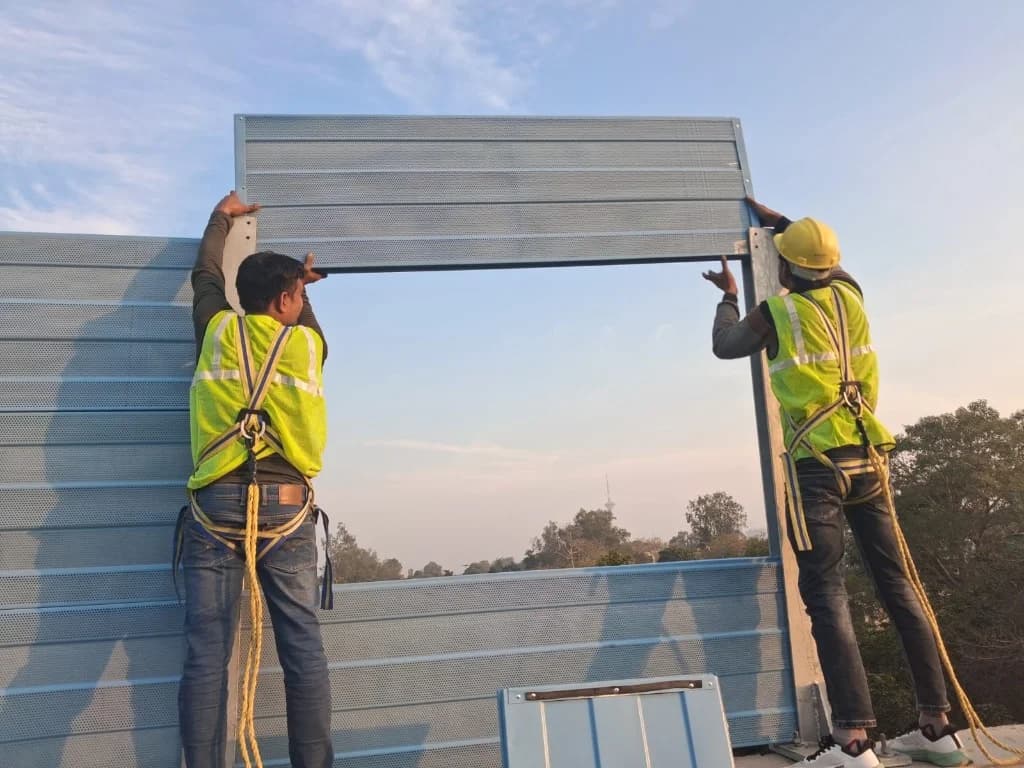
Elevated Viaduct Acoustic Sound Mitigation
Noise is a silent pollutant. Unchecked, it degrades urban ecosystems, disrupts local wildlife, and harms human health.
Highways and metro viaducts generate intense acoustic energy. Without intervention, it floods nearby homes, schools, and hospitals, causing chronic stress. To combat this, the National Green Tribunal (NGT) mandates strict environmental limits—typically 55 dB during the day and 45 dB at night for residential zones.
To meet these limits, you cannot just build a concrete wall. You need acoustic science.
SVR Engineers approach every project with an environmental mindset. We calculate the required height and material density to interrupt the direct line of sound. We test our panels at the CSIR-National Physical Laboratory (NPL) to verify their Noise Reduction Coefficient (NRC) and Sound Transmission Class (STC). We prove our environmental impact in the lab before we ever break ground.
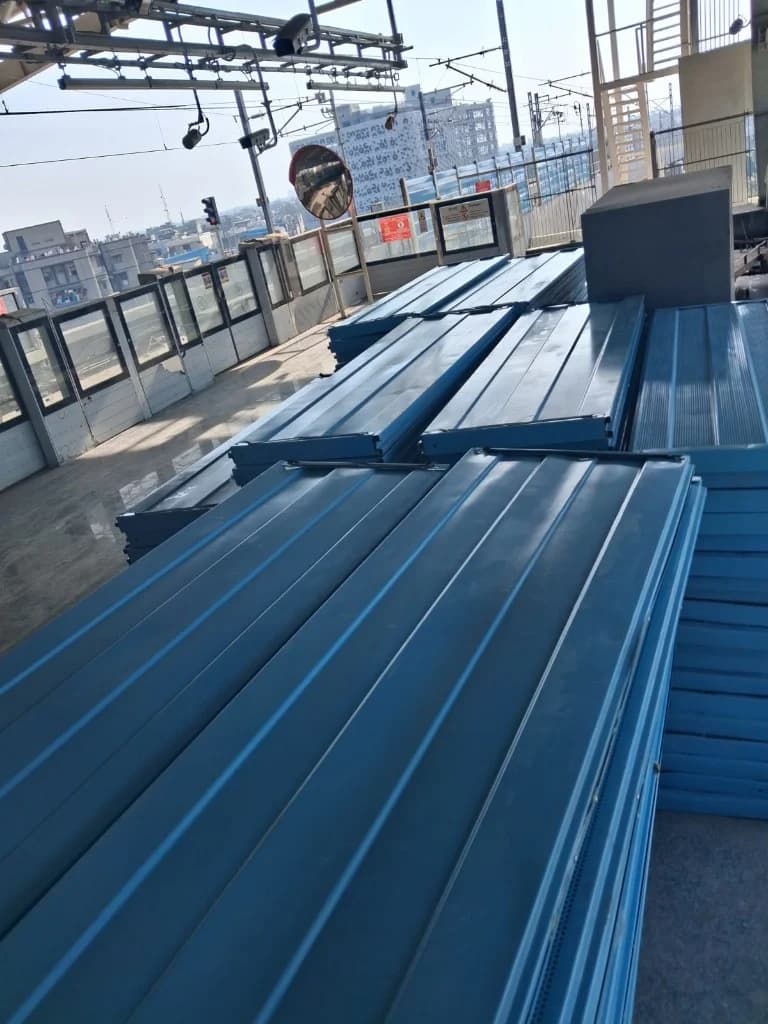
Modular Metallic Sound Barrier Panels Ready for Trackside Installation
We do not use standard templates. Every ecosystem is different. Here is how we engineer our systems to protect high-impact zones.
High-pitched rail-wheel friction and traction motor noise penetrating dense neighborhoods.
Vibration-resistant acoustic panels designed specifically for live metro corridors, handling heavy wind loads while creating a sound shadow that protects surrounding homes.
Constant, high-speed tire roar degrading the quality of life in adjacent townships.
Hybrid barrier configurations. We use absorptive metallic panels at the bottom to trap tire noise, and transparent panels at eye-level to maintain motorist safety and natural light.
Low-frequency mechanical hum from transformers and heavy machinery disrupting the local environment.
Heavy-duty acoustic enclosures designed to trap continuous industrial sound, ensuring the factory boundary meets strict green zone norms.
Chronic noise exposure near hospitals, schools, and wildlife corridors.
Aesthetically finished, high-performance walls that shield sensitive populations—and local fauna—from chronic noise stress.
We manufacture, supply, and install high-grade GI (Galvanized Iron) and Aluminum acoustic panels. We configure the exact acoustic system your environment requires.
Built with a perforated aluminum or GI front face and a high-density rockwool core. The perforations trap sound waves, turning acoustic energy into friction and heat.
High-impact acrylic panels that reflect sound upward while letting natural daylight through.
The best of both worlds. Absorptive metallic panels at the bottom (where tire noise is loudest) and transparent panels at the top (to maintain daylight and open sightlines).
A noise barrier is a massive vertical sail catching the wind. It must be engineered to survive the elements while protecting the environment. We deliver the complete support system, designed for site-specific safety and long-term durability.
Vertical structural steel stanchions (HEA/HEB or I-beam stanchions) designed to resist lateral gust wind loads. Full compliance with IS 875 (Part 3) codes, making sure that the barrier does not fail in any extreme weather conditions.
Fixation to reinforced concrete parapets or crash barriers. Cast-in-situ anchor cages or chemical anchorage for dynamic loads is used for fixation to the viaduct.
UV-stabilized EPDM rubber seals are installed on the flange of the stanchion. This provides a complete seal against acoustic flanking and vibration rattle due to wind buffeting of heavy traffic.
The structural steel is hot-dip galvanized (IS 4759) and coated with architectural powder finish to provide a long-lasting outdoor performance, making the structure resistant to rust and corrosion.
The secondary steel wire retention system and positive mechanical retention. Our panels will stay captive even under heavy impact or during storms to ensure safety of the people and environment around it.
The drainage channels in the bottom and insect-proof weep holes. This provides rainwater drainage naturally without affecting the low-frequency acoustic sound dampening properties.
Documentation of noise barrier fabrication, parapet stanchion alignment, and site integration along active infrastructure corridors.
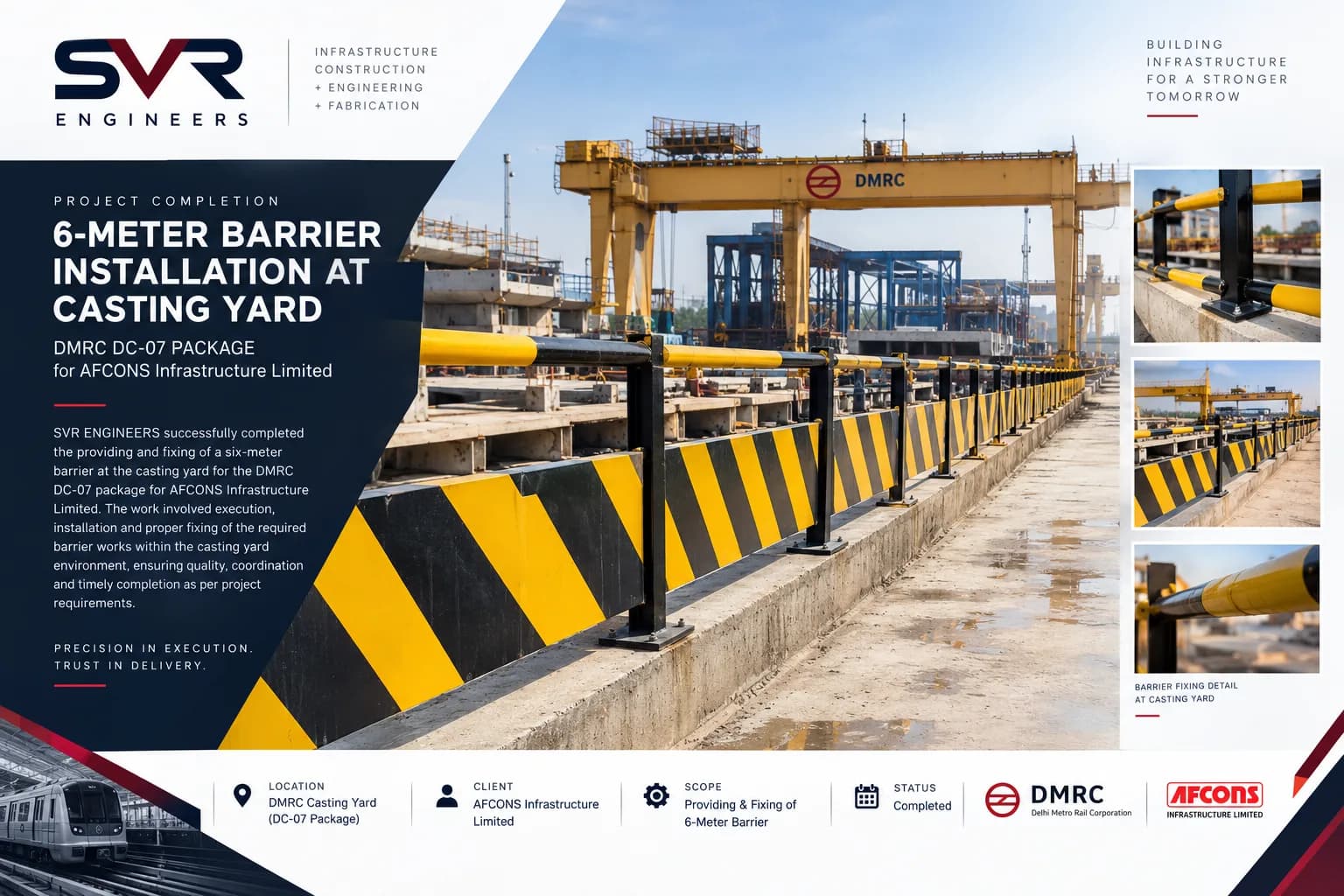
Elevated Metro Acoustic Mitigation
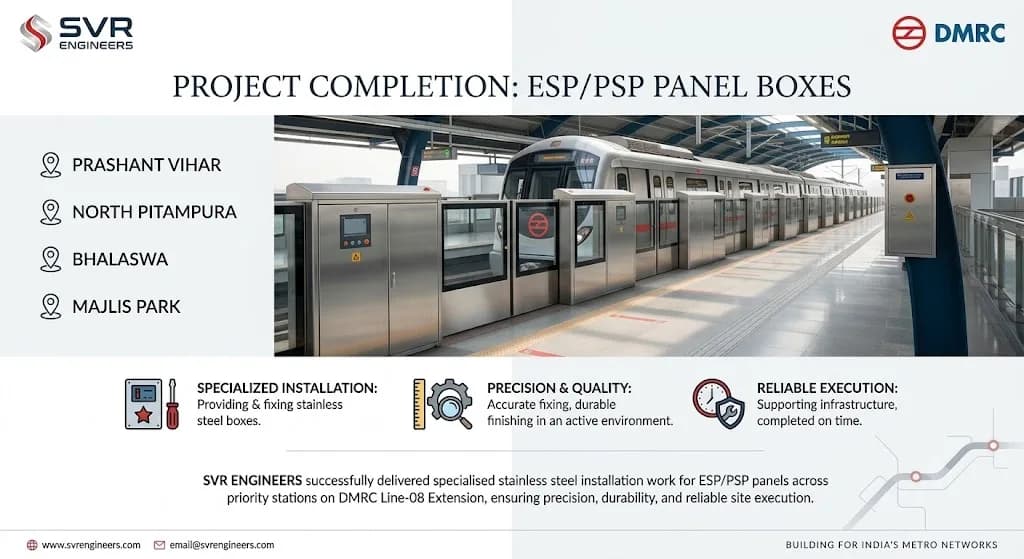
Parapet Stanchion Structural Mounting
Corridor Civil & Steel Integration
Key engineering and execution considerations for acoustic sound wall packages.
Noise barrier installations in India are planned in alignment with IRC:SP:98 (Guidelines for Noise Barriers along Roads) and international standards such as EN 1793 (Acoustic Performance) and EN 1794 (Structural Requirements), alongside IS 875 (Part 3) for regional gust wind-load calculations.
Structural steel stanchions are anchored onto concrete crash barriers or parapet walls using engineered base plates secured with high-tensile anchor studs. On existing structures, chemical epoxy anchor systems with on-site pull-out validation are standard.
Sound absorptive panels feature perforated front facings that allow sound waves to enter a dense mineral or rockwool core, converting acoustic energy into heat. Sound reflective barriers (such as solid acrylic or polycarbonate) reflect sound energy upward and away from sensitive ground receivers while preserving daylight and sightlines.
Infrastructure-grade transparent panels are manufactured with co-extruded UV-stabilizing layers specifically formulated for outdoor transport structures. This prevents premature yellowing, haze, and embrittlement under intense tropical sunlight.
Yes. SVR Engineers coordinates structural steel post fabrication, panel assembly, site transport, foundation bolt setting, crane-assisted erection, and final sealing as an integrated engineering package.
Share your project cross-sections, alignment drawings, and acoustic requirements. Our engineering team will assess wind-load profiles and recommend cost-effective sound wall configurations suited to your corridor.